


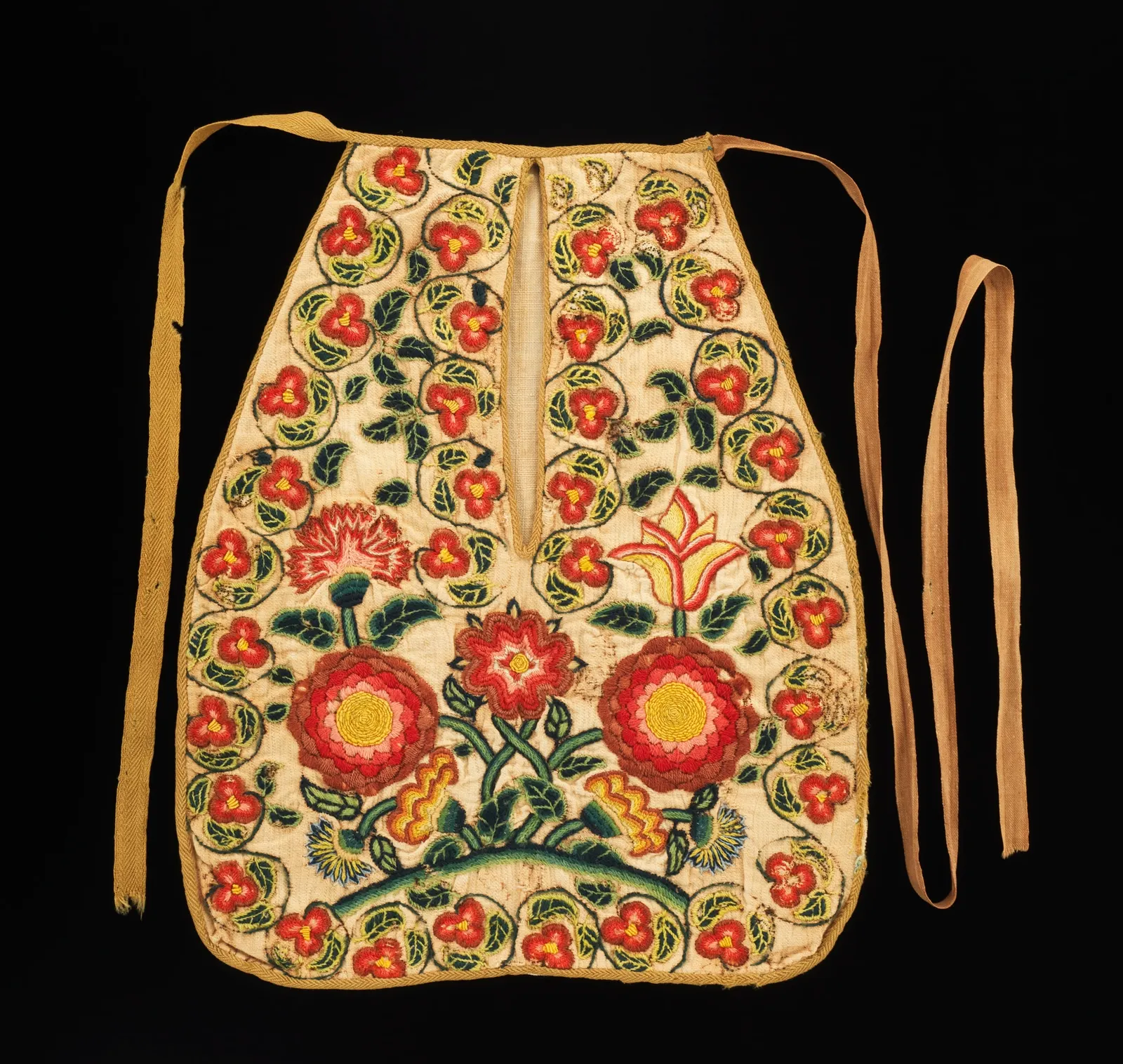
Picture credit
"Pocket" by Unknown maker — https://commons.wikimedia.org/wiki/File:Pocket_MET_1996.2_CP4.jpg — CC0 1.0 (https://creativecommons.org/publicdomain/zero/1.0/)
By Tailor, Weaver, Jeweler, Dyer Published
Build card
This card as data: crinoline-build-card.csv (CSV) · file notes (JSON): where the values come from, version and license
Data: The Metropolitan Museum of Art Open Access data (CC0): C.I.53.72.15, 2008.297a, b, 1985.27.4; Paris Musées, Musée Carnavalet G.2037, collection data (CC0); Rijksmuseum, Amsterdam, collection data (CC0): RP-P-OB-41.038; É. Littré, Dictionnaire de la langue française, vol. 1 (Paris: Hachette, 1873), p. 901, public domain (facts restated)
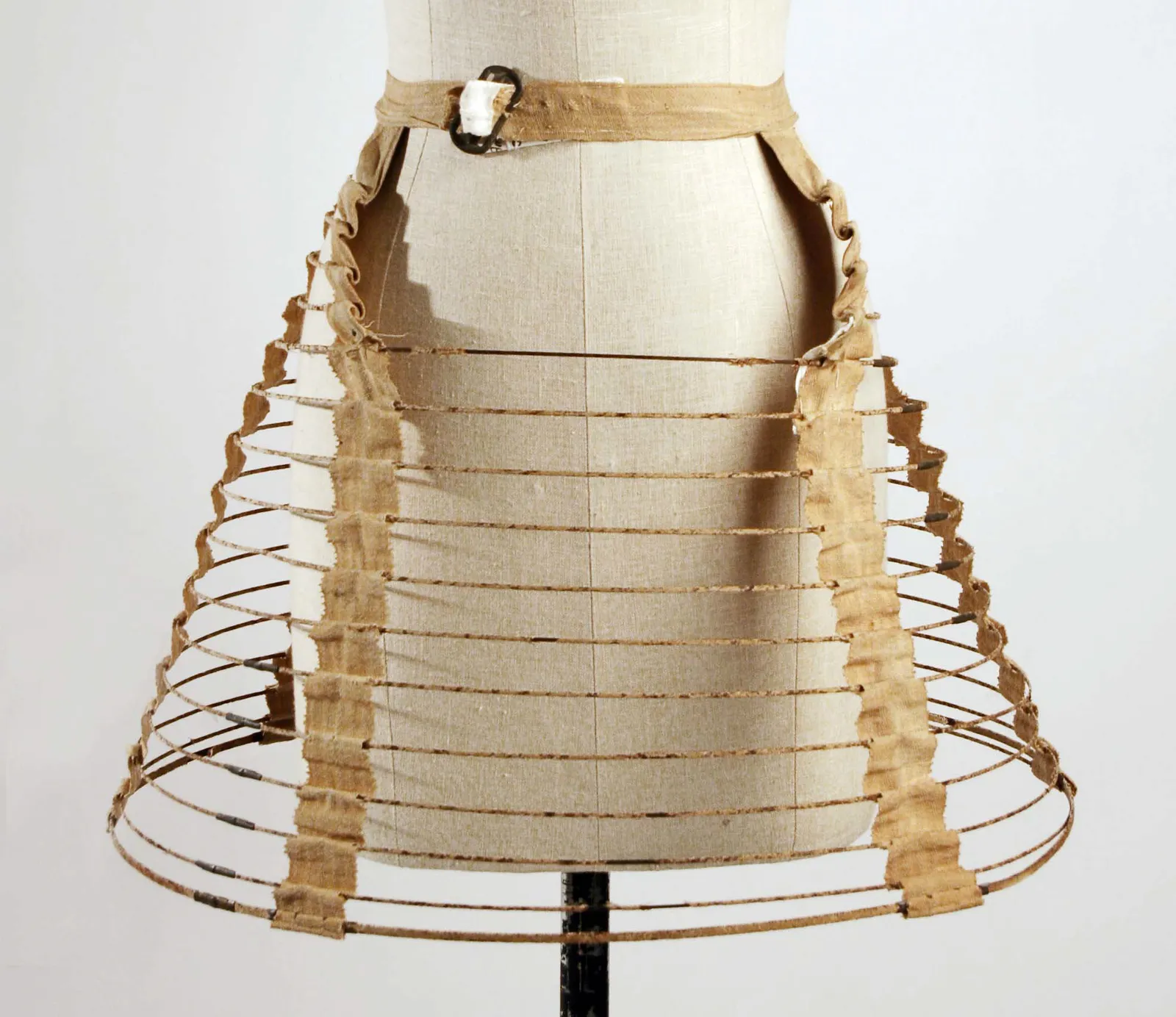
An American cage crinoline of 1857 (Met C.I.53.72.15), recorded as steel and cotton, with its tapes hanging from a buckled waistband.
"Cage crinoline" by Unknown maker — https://commons.wikimedia.org/wiki/File:Cage_crinoline_MET_CI53.72.15_F.jpg — CC0 1.0 (https://creativecommons.org/publicdomain/zero/1.0/)
A cage crinoline hangs from its waistband: steel hoops on cloth tapes, each wider than the one above. The Met's American example of 1857 is recorded as steel and cotton [1]. Yet the name is older than the steel: in French, the TLFi dictionary first records crinoline in 1829 for a cloth of horsehair and linen, and in 1848 for a stiff petticoat that held a skirt out [2].
Littré's French dictionary of 1873 kept that order: first a horsehair cloth, then a petticoat originally made of it [3]. Its example "une crinoline en acier", a steel crinoline, shows the name moving on again, to frames like The Met's [1][3].
In the museum's photograph, a cloth waistband closes with a metal buckle. Tapes run from it down each side, and two more run down the front from the top hoop to the bottom one. Each hoop passes through these tapes, so the hoops hang in tiers with only tape between them [1].
This site calls the drawing below the tension map: a qualitative diagram of where a garment takes strain, marking the tapes and fastenings that bear load without putting a number on them. A solid line is what the photograph shows, and a dashed line is inferred and labelled that way.
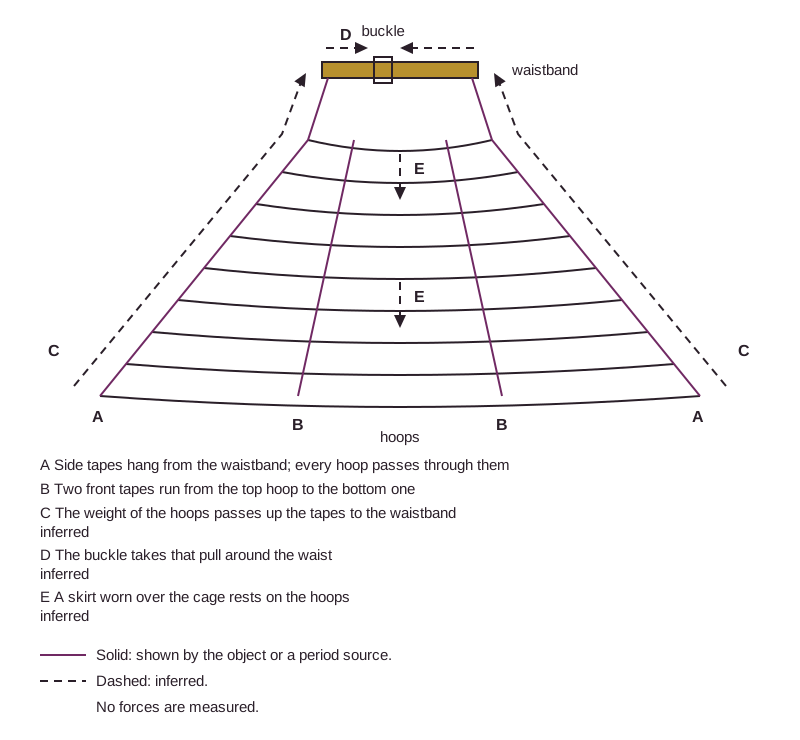
Wider than a phone screen: swipe sideways along the diagram, or open it full size.
The tension map for a cage crinoline, a front view drawn for this page from the photograph of Met C.I.53.72.15, not to scale. No forces are measured. Screen colors, not dye colors.
Diagram: Tailor, Weaver, Jeweler, Dyer, CC BY 4.0
"The tension map: cage crinoline, front view" by Tailor, Weaver, Jeweler, Dyer, from https://tailorweaverjewelerdyer.com/construction/crinoline/. Licensed under CC BY 4.0: https://creativecommons.org/licenses/by/4.0/
Data: The Metropolitan Museum of Art, C.I.53.72.15, photograph and data row (CC0); Paths drawn for this page; dashed paths are inferred and no forces are measured
| Path on the map | Line | What it rests on |
|---|---|---|
| A. Side tapes hang from the waistband; every hoop passes through them | Solid | Seen in the photograph of Met C.I.53.72.15 |
| B. Two front tapes run from the top hoop to the bottom one | Solid | Seen in the same photograph |
| C. The weight of the hoops passes up the tapes to the waistband | Dashed (inferred) | Inferred; no source read here describes the load |
| D. The buckle takes that pull around the waist | Dashed (inferred) | Buckle seen in the photograph; its load inferred |
| E. A skirt worn over the cage rests on the hoops | Dashed (inferred) | Inferred; no skirt is shown with this object |
The cage works like a suspension: the waistband holds the tapes, and the tapes hold the hoops. That second step is path C, drawn dashed because it is inferred.
Before steel, crinoline was something woven, and TLFi defines the cloth as a linen warp (the lengthwise threads) crossed by a horsehair weft (the crosswise ones), used for upholstery and for clothing [2]. Littré gives the warp as black thread and lists collars, bags, furniture covers and petticoats made of it [3].
The two dictionaries disagree about where the word came from. Littré derives it from crin, French for horsehair [3]. TLFi calls it a borrowing from Italian crinolino, from crino (horsehair) and lino (flax), a word Italian used for both the cloth and the petticoat in the first half of the 19th century [2].
A roll of stiff cloth and a ring of metal hoop on a worktable.
Illustration: Tailor, Weaver, Jeweler, Dyer. Generated schematic image — not a photograph or historical record. Reuse terms: may be shared with this full caption and a link to the source page; not licensed under CC BY.
Human hair was worked in these decades too, and Mark Campbell's 1867 manual braids it at a table with bobbins and weights [4], as the Victorian hair jewelry entry shows.
TLFi also sketches the petticoat's route: horsehair cloth at first, then flexible strips and whalebone at the hem, then metal hoops joined by cloth tapes [2]. The timeline below sets the dated evidence read for this page in order.
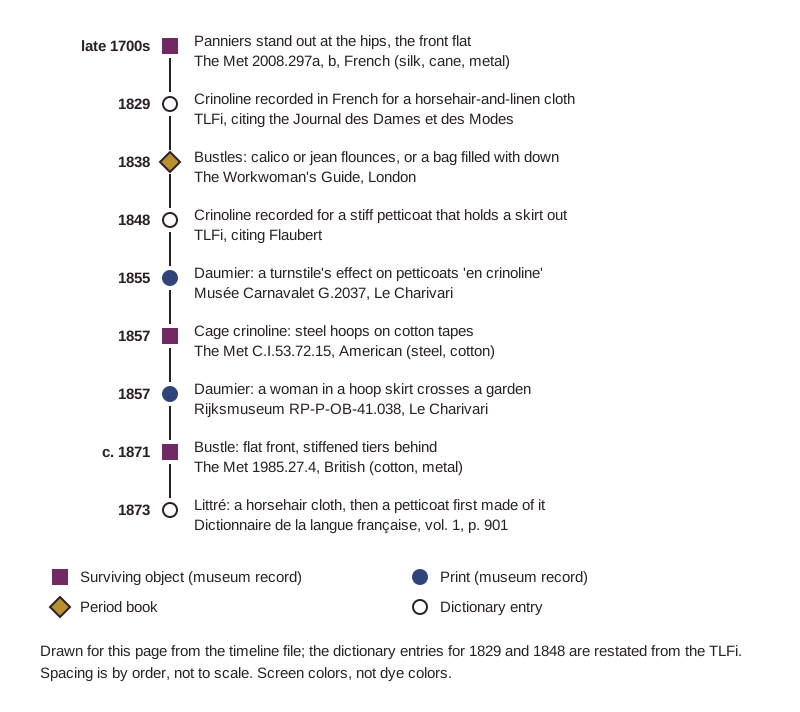
Wider than a phone screen: swipe sideways along the diagram, or open it full size.
The name and the frames in order, drawn for this page. The 1829 and 1848 entries are restated from the TLFi and are not in the timeline file. Screen colors, not dye colors.
Diagram: Tailor, Weaver, Jeweler, Dyer, CC BY 4.0
"Crinoline: the name and the frames, late 18th century to 1873" by Tailor, Weaver, Jeweler, Dyer, from https://tailorweaverjewelerdyer.com/construction/crinoline/. Licensed under CC BY 4.0: https://creativecommons.org/licenses/by/4.0/
Data: The Metropolitan Museum of Art Open Access data (CC0): C.I.53.72.15, 2008.297a, b, 1985.27.4; Paris Musées, Musée Carnavalet G.2037, collection data (CC0); Rijksmuseum, Amsterdam, collection data (CC0): RP-P-OB-41.038; The Workwoman's Guide (London, 1838), Project Gutenberg eBook #75494, public domain; É. Littré, Dictionnaire de la langue française, vol. 1 (Paris: Hachette, 1873), p. 901, public domain (facts restated); Trésor de la langue française informatisé, crinoline (dates of 1829 and 1848 restated, not copied); Order of entries drawn for this page
| Date | What | Evidence |
|---|---|---|
| late 18th century | Panniers stand out at the hips, the front flat | Object: The Met 2008.297a, b [5] |
| 1829 | Crinoline recorded in French for a horsehair-and-linen cloth | Dictionary: TLFi, citing a fashion journal [2] |
| 1838 | Bustles: calico or jean flounces, or a bag filled with down | Book: The Workwoman's Guide [6] |
| 1848 | Crinoline recorded for a stiff petticoat that holds a skirt out | Dictionary: TLFi, citing Flaubert [2] |
| 1855 | Daumier: a turnstile's effect on petticoats "en crinoline" | Print: Musée Carnavalet G.2037 [7] |
| 1857 | Cage crinoline: steel hoops on cotton tapes | Object: The Met C.I.53.72.15 [1] |
| 29 August 1857 | Daumier: a woman in a hoop skirt crosses a garden | Print: Rijksmuseum RP-P-OB-41.038 [8] |
| circa 1871 | Bustle: flat front, stiffened tiers behind | Object: The Met 1985.27.4 [9] |
| 1873 | Littré: a horsehair cloth, then a petticoat first made of it | Dictionary: Littré, vol. 1, p. 901 [3] |
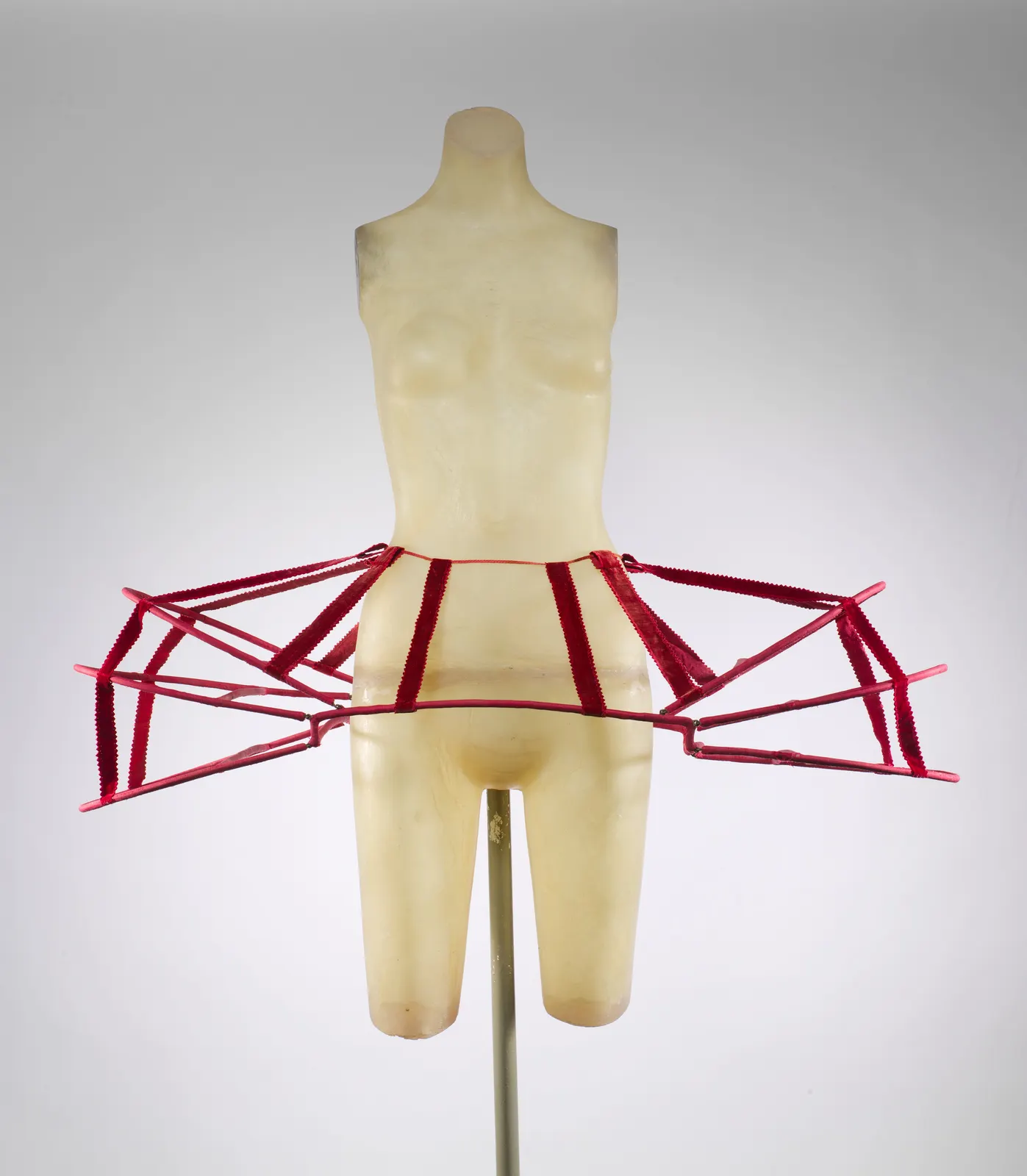
French panniers of the late 18th century (Met 2008.297a, b): a frame of cane covered in pink silk and bound with red ribbon, standing out over each hip from a thin waist tie.
"Panniers" by Unknown maker — https://commons.wikimedia.org/wiki/File:Panniers_MET_DP162233.jpg — CC0 1.0 (https://creativecommons.org/publicdomain/zero/1.0/)
Frames that stand out from the body did not begin with the crinoline: The Met's French panniers of the late 18th century, recorded as silk, cane and metal, stand out at the hips in the museum's photograph and leave the front flat [5]. The 1857 cage, by contrast, stands out all round [1].
The 18th-century clothing entry places the petticoat among the layers of those decades. The crinoline itself began as one more petticoat, a stiff one of horsehair cloth [2].
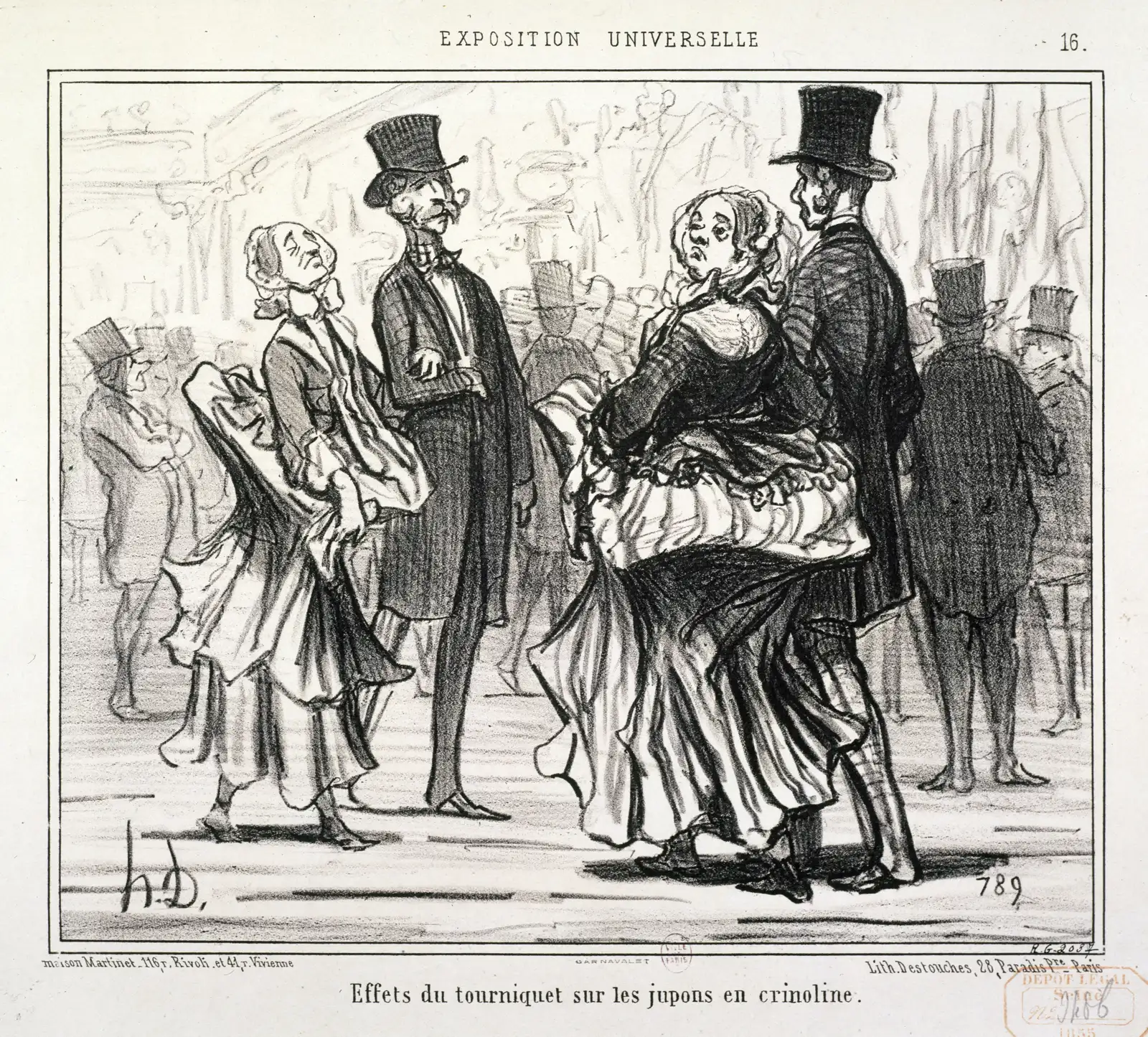
Honoré Daumier, "Effets du tourniquet sur les jupons en crinoline", plate 16 of his 1855 series on the Exposition universelle (Musée Carnavalet G.2037).
"Effets du tourniquet sur les jupons en crinoline" by Honoré Daumier — https://commons.wikimedia.org/wiki/File:Effets_du_tourniquet_sur_les_jupons_en_crinoline._N%C2%B016,_G.2037(3).jpg — CC0 1.0 (https://creativecommons.org/publicdomain/zero/1.0/)
Daumier drew these wide skirts at least twice, and his 1855 lithograph, plate 16 of a 41-plate series on the Exposition universelle in Le Charivari, takes as its title what the turnstile did to crinoline petticoats [7]. Its two women stand in a crowd with their skirts crushed out of shape.
Two years later he drew a man watching a woman in a hoop skirt cross his garden. The Rijksmuseum's description says he would sooner see a hurricane go through it [8].
These prints are jokes rather than records. No source read for this page says how wearers sat down, went through doors or rode in carriages, so those questions stay open here.
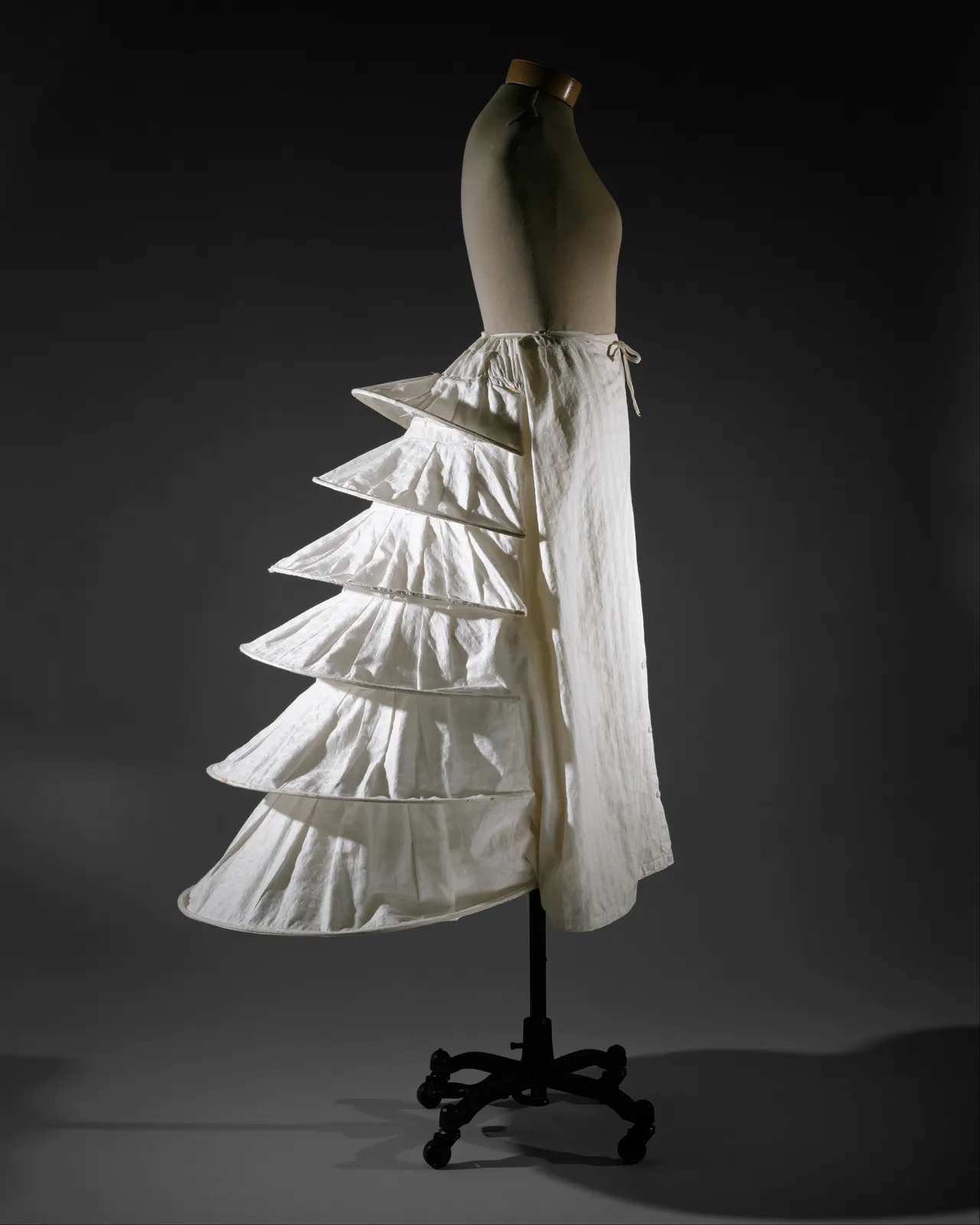
A British bustle of about 1871 (Met 1985.27.4), seen from the side: a flat front panel tied at the waist, with stiffened tiers standing out behind.
"Bustle" by Unknown maker — https://commons.wikimedia.org/wiki/File:Bustle_MET_DT8035.jpg — CC0 1.0 (https://creativecommons.org/publicdomain/zero/1.0/)
The Met's British bustle of about 1871 is recorded as cotton and metal [9]. The records read here do not date the end of the round cage, but this later shape carries its fullness at the back.
Bustles were not new after the cage. The Workwoman's Guide of 1838 already describes three kinds: two flounces of strong calico hemmed over a very thick cord, two flounces of jean, and a bag of glazed lining muslin filled with down [6]. It warns that they "should not be too large, or they look indelicate" [6].
For period costume, this site's stance is that the outline matters more than the trimming, and panniers, a cage and a bustle make three different outlines.
In the museum records read for this page, the two names overlap in the 1850s. The Met titles its 1857 frame of steel hoops a cage crinoline [1], and the Rijksmuseum describes the crinolines in an 1857 print as hoepelrokken, Dutch for hoop skirts [8]. The word crinoline is older than the steel cage: French dictionaries record it first for a horsehair cloth [2][3].
Tailor, Weaver, Jeweler, Dyer. “Crinoline: The Word Meant a Horsehair Cloth Before the Cage.” Published 27 October 2026. https://tailorweaverjewelerdyer.com/construction/crinoline/. Accessed: add the date you read it.
Facts here carry numbered links to the sources listed above. How entries are checked: Weighing the Evidence: How This Site Checks Facts. Every substantive change is dated on Corrections. Spotted a mistake or have a better source? Contact and Correspondence.
"Pocket" by Unknown maker — https://commons.wikimedia.org/wiki/File:Pocket_MET_1996.2_CP4.jpg — CC0 1.0 (https://creativecommons.org/publicdomain/zero/1.0/)
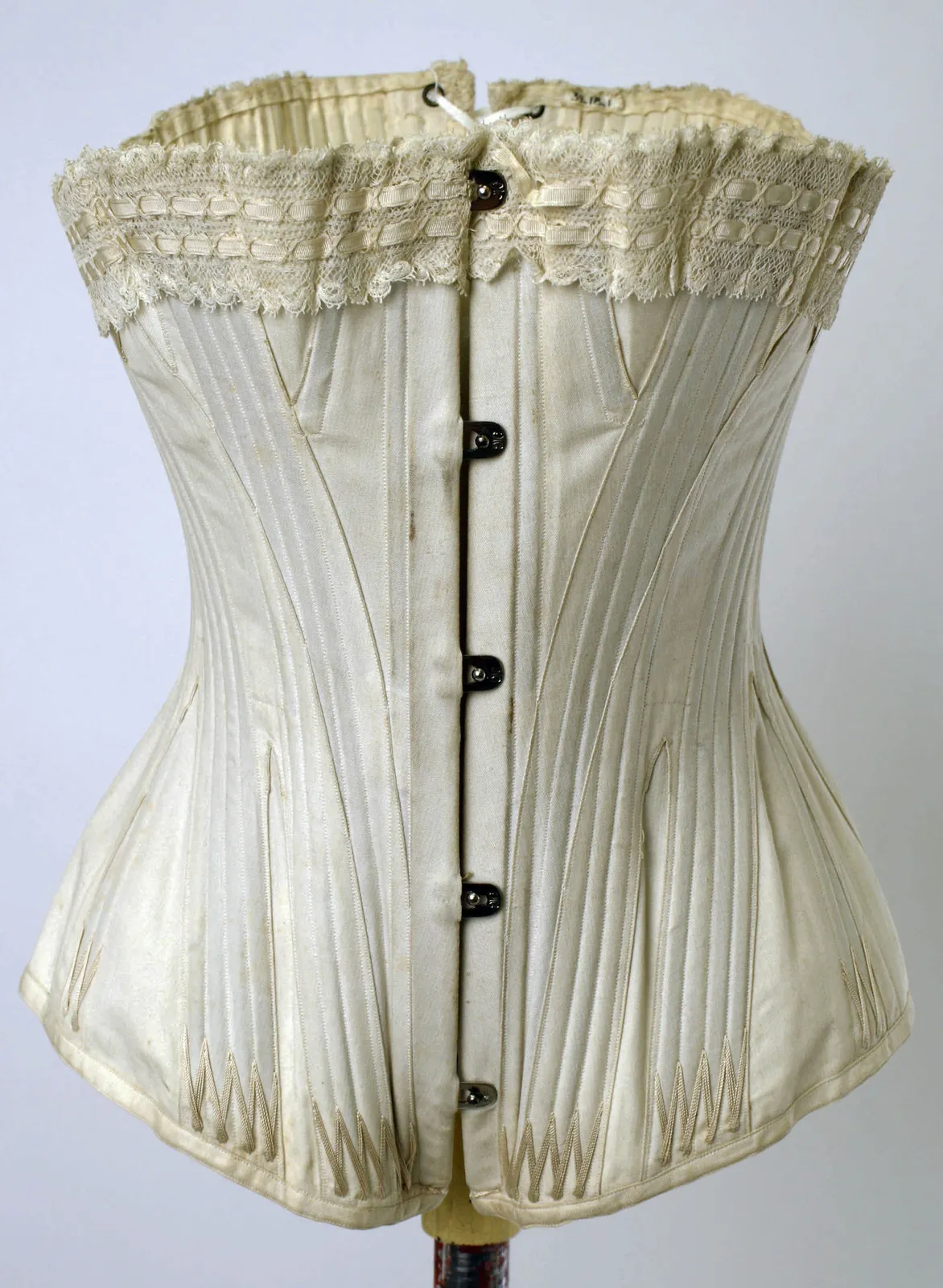
"Corset" by Unknown maker — https://commons.wikimedia.org/wiki/File:Corset_MET_CI39.18.1_F.jpg — CC0 1.0 (https://creativecommons.org/publicdomain/zero/1.0/)

